Living in an environment where depressing incidents are common can challenge the stability of any human mind. To be able to face them, fight them, accept them and live with them is a true test of integrity, endurance and patience of a human. Almost every month Pakistan sees a bomb blast; a riot or a strike that would have caused serious functional breakdowns in any other country, but this nation survives through them! People have often commented that Pakistani’s have lost the sense of valuing life. For them death of a hundred people is nothing. This may be true to some extent, but, not because we are cruel and emotionless people, but, because we have seen so much that now our brains have adapted to contain such horrific news in a subtle way and deal with it. Is moving on a bad thing? Recently Gulf, a very famous shopping area in Clifton Karachi, saw an unpleasant incident. Two shop owners, belonging to different ethnic backgrounds, got involved in a conflict with each other, their colleagues supported them and it got serious to the extent of usage of guns. Customers were trapped in there for a good three to four hours because of it. People were scared and it was the breaking news of the day. Next day if you had visited Gulf, you wouldn’t believe that this place was dangerous just a few hours before. Shopkeepers were back in action and there were customers present (not as many as on a usual day but significant enough). Customers not showing up would have caused loss in business but thanks to live hearted people here, that did not happen. This was an example on a small level; the blast carried out on the 10th of Muharram on Shiaa congregation was devastating. 25 people lost their lives while several were injured. It was a mental trauma for many. Chaos was further created by a certain group of people to worsen the conditions. If this happened internationally everything would have been closed down, people would have been scared to go out. But with all this happening in our country, within 5-6 hours street life was back to normal. Not only this, but, also looking at the diverse crowds we are inhabited by including the foreigners, it is a proud sight to see that even though being surrounded by such uncertainity they tend to live their normal lives amongst us. Thus, the economic, social or even academic activities wont stop but continue to grow.
There are several other examples to it. People have learned to move on, this may be bad as gradually people are losing hope and are not voicing their concern about the instability. But on other hand, in a nation that has been crippled, people had to find a way to survive and this is how we survive. This is our instinct to survive. Asking us to stay back home or cut short our social gathering is like asking a human not to breathe because there are some viruses in the air. Our lungs won’t stop breathing but will depend on white blood cells to take care of these viruses. In the same way, people can’t stop or change their routines as often, thus it’s the responsibility of the nation’s defense forces to protect them.
Writing is the one thing that can stay as lively and imaginative as it was when it was first conceived and put into words by the author, the books are always better than the movies, why is that so? Because nothing can beat our own imaginations, the colours, the vividness of the stories which can be created in one’s head are much more brilliant than any on screen marvel. Writers combine thoughts; knowledge and imagination to create beautiful masterpieces that can be understood, no matter who you are, where you come from or what language you speak. We all have a human connection, and it is this, mystical bond which makes us all different and thus similar in the struggle of the Human Struggle. Thus, the worst of times can eventually become the best of times for a Pakistani writer and poet. So even if Pakistan may face hard times, the world’s eyes are constantly trained not just on it but on the tales emerging from the country. For the writers of Pakistan trying times can be used to inspire great writing that can describe the triumphs out of struggle for it is these times in which inspiration can be found, and shine hope in the darkness. A new wave of Pakistani writers in the English genre is now winning literary acclaim as they seamlessly move between London, Karachi, New York and Lahore. Dealing with a heady mix of social and political themes, the writers are flirting with stories of war, loss, love and, of course, conflict. Pakistan may be in the spotlight of some of the world’s problems but it has allowed writers and artists to explain their views and the world now takes notice. The Pakistani Author Nadeem Aslam’s novel, The Wasted Vigil, explores the complexities and fallout of war and how not just countries but their people suffer. Set in modern Afghanistan, Aslam says he wanted to create a portrait of the conflicts that shape our world and relate the identities of characters and situations in the book to how the current struggles take place.
We see this when we look at Mohsin Hamid’s first novel, Moth Smoke published in 2000, which was set against the backdrop of the Indian-Pakistani arms race. And his second and highly acclaimed The Reluctant Fundamentalist published in 2007 explored the aftermath of 9/11 and the international unease it unleashed. Hamid chose the monologue to narrate his story and his Pakistani protagonist tells his tale to a nameless American who sits across from him in a Lahore cafe.
In 2008 came the first real English language political parody in Pakistan. The author Mohammad Hanif’s first novel, A Case of Exploding Mangoes, is an open deride of Islamic fundament-alism and the plots and counter-plots taking place during General Zia ul Haq’s rule in the 1980s. But Pakistani writers have many more subjects to deliberate on than just politics. Pakistani writing is very diverse now. Mohammad Hanif mentions in one of his interviews with Gupshup that ‘There’s a lot of ambition in the [Pakistani] writing and no subject is taboo.’
Another author Moni Mohsin says that ‘Pakistani fiction is changing as writers are experim-enting with new genres and new subjects,’ Moni believes that since Pakistanis have been exposed to and witnessed a fair amount of political and social upheaval, that it is bound to find a route to expression in Pakistani fiction. But that is not to say that Pakistani writers are restricting themselves to such a view, rather in her own book, The Diary of a Social Butterfly, which is a light-hearted comedy and one that mocks a privileged strata of Pakistani society. The Diary of a Social Butterfly began as a column in Pakistan’s Friday Times and its central character is Butterfly, a silly socialite, the column was then compiled into a book which speaks a kind of Lahori English.
We see more of diversity in the topic of discussion amongst new authors which have come into the Literary Scene. It is clear from two eagerly awaited works that have reached bookstores: Kamila Shamsie’s fifth and reportedly finest novel, Burnt Shadows, and a collection of short stories by Daniyal Muee-nuddin. Kamila Shamsie’s story is a saga that does not focus on politics but rather it intertwines the lives of two families over a period of 50 years. Her narrative goes through the devastation of Nagasaki in WW II through the conflict-ridden formation of Pakistan in the late 1940s to post-9/11 Manhattan and war-torn Afghanistan.
We see Mueenuddin revive the short story genre which discusses the topics of farm managers, servants, landlords and political fixers which are similar to Pakistani culture.
Mohsin Hamid is one author to take notice, his book The Reluctant Fundamentalist was shortlisted for the Man Booker Prize in 2007, he is notably the first Pakistani writer to make a debut on the list which lead to the spark for other Pakistani writers in the international literary arena, He says to The Telegraph Calcutta: ‘There’s something very powerful and fresh happening in Pakistani letters at the moment.’ He strongly believes that there is exciting development brought by the writing of Mohammed Hanif and Daniyal Mueenuddin in the space of year whe n their books debuted. He says that ‘Neither Pakistan nor India has produced anything like them before.’
Nadeem Aslam who is reported earlier says that compared to Indian writing, Pakistani writing is still in its infancy and needs time to grow and to take command. And that while Indian writers have been around for 25 years or so, Pakistani authors are only just beginning derive attention especially in the international arena.
Today if eyes have noticed Pakistani authors, it is because the few authors who have released their books have made very interesting contri-butions to the Literary scene during the last couple of years and are expecting more in future. We see international exposure to our writers with the Karachi Literature Festival which is the first of its kind, organised and hosted by the British Council Pakistan in association with Oxford University Press in March of this year. The Festival was also affluently discussed and celebrated by Dawn and on the international media front, the festival was discussed in detail by UK’s The Inde-pendent, India’s Hindustan Times and Times of India, and New Zealand’s Herald. BBC Radio’s Urdu Service also covered the event, showing that our literary exposure is finally kicking off, and may lead us into major international events before long.
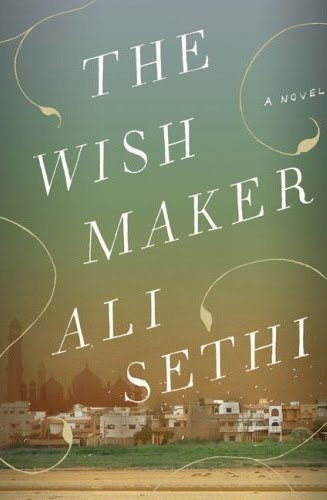
A host of new names have also joined the Pakistani literary circle. Penguin books is excited about, Harvard-educated Ali Sethi’s debut novel The Wish Maker, which is a family saga and Fatima Bhutto’s book on the history of the Bhutto family.
Uzma Aslam Khan’s third novel, The Geometry of God, has been published in the US, Italy, and France and has been released in Spain. She has also written an essay-style piece called Flagging Multi-culturalism: How American Insularity Morally Justifies Itself, which has been pu blished by Atlas Books USA in their anthology How They See Us later this year.
The Authors feel that many factors have come together to create the right conditions for the emergence of Pakistani literary fiction. Also, today, Western publishers are constantly seeking the next ‘new’ thing and they have suddenly turned their attention to Pakistan. In addition, a growing number of young Pakistanis are receiving degrees in creative writing from well-regarded Western universities and there’s an explosion in home grown newspapers, magazines and periodicals creating a new generation of writers and readers.
In the days when Hanif went in search of a Pakistani publisher for A Case of Exploding Mangoes and couldn’t find one the newer writers have found it much easier than before. He remembers when most thought the book wouldn’t have any readership and one publisher even told Hanif that they could probably sell three copies. But now with the release of his book Hanif says more authors have debuted in the literary exchange with more of them getting attention from T.V. and Websites, it has opened routes to help them publish their books.
We cannot assume that it the country’s current crisis that is exposing Pakistani authors to the international market in the works of Pakistani writers Uzma Aslam Khan says ‘That it’s very dangerous to expect writers from anywhere, including Pakistan, to speak in the same voice as news anchors. I think that this expectation is being put on us, at times very overtly,’ as reported by Pak Tea House.
It could be seen that Pakistan may be in the headlines for all the wrong reasons but authors like Rakshanda Jalil say firmly that Pakistani writers are not playing to the gallery. ‘Though political unrest usually spawns good literature, Pakistani authors are not performing with one eye trained on the pantheon of Western critics and the other on agents who will get them lucrative deals.’ Rather, they are finding their own individual voice. We must remember it is one honest word which is louder than a crowd. The Literary prospects for Pakistani writers is ever growing and full of vast potential, the writers of our past have infused in the culture of today and allowed new and fresh views to establish the ground routes of how life is now. We can only hope that the individual voice is strong enough to brave the test of time and steer hands with the future.
Basant (a Sanskrit word for spring) is a seasonal festival of Indo-Pak sub-continent. It is a centuries old cultural tradition of Punjab, celebrated at the end of winter to welcome spring in Pakistan. Apart from other cities of Punjab, the event is mainly celebrated in provincial capital Lahore in the month of February with immense zeal and enthusiasm. In pre-partition India, Hindus, Muslims and Sikhs all celebrated Basant. Mustard blossom that is yellow in color is considered the color of spring and accordingly yellow clothes were worn; men wore yellow turbans and women yellow dupattas and saris. It was common to sway swings among Hindu, Muslim and Sikh women together and Basant’s traditional songs were sung that reflected the liveliness and romance of life in Punjab.
Kite flying is the major and most colorful event of this festival. The sky is covered with different colorful kites and sweet yellow rice (zarda) is prepared specially for this occasion. People use searchlights in the night to fly kites. All the family members gather at one single place, mostly on the rooftops, and celebrate this festival. Ancient Mughal palaces throw open their doors for all-night parties to view the kites, illuminated by spotlights slashing the sky. Stars from the local 'Lollywood' film industry perform with classical Qawali musicians at parties in traditional haveli homes. Hotels in Lahore in Islamabad are packed to capacity and quite often it happens that people don't even find a room to stay. Since not only people from all across the country, but people from neighboring countries like India also come to Pakistan to enjoy this flamboyant festival with their relatives.
Kite making has developed into a big industry in Pakistan. Thousands of people are involved in this industry and are earning their livelihood from kites and thread. The small festival originating from Lahore has now spread all over the country enlightening the welcoming festivities of spring.
Even though an overwhelming majority of Pakistan’s population follows the religion of Islam, there are many religious minorities that co-exist within the Pakistani society, pursuing their religion in peace.
One such community, the Kalash tribe, resides exclusively in a particular geographical area; the three valleys of Birir, Bumburet and Rumbur known locally as Kafiristan, which is situated in the Hindu Kush between the Afghan border and Chitral valley.
The origin of the Kalash tribe is one of the most fascinating aspects of the tribe. Since no proper record has been kept of Kalash history, all of the people’s beliefs are rooted in mythical tales passed down from generation to generation by the elders of the community. The Kalash firmly believe that they are the descendents of Alexander the Great’s brave general Shalak Shah of Tsiam, to whom Alexander gave the Chitral valley as a reward. Tsiam is a mythical place, and no one knows where it is located.
The Kalash have been ruled by the Mehtar of Chitral since the 1700s and have enjoyed a cordial relationship with the major ethnic group of Chitral, the Kho. The multi-ethnic and multi-religious State of Chitral ensured that the Kalash were able to live in peace and harmony and practice their culture and religion. The Nuristani, their neighbors in the region of former Kafiristan east of the border, were invaded in the 1890s and forced to convert to Islam by Amir Abdur-Rahman of Afghanistan and their land was renamed Nuristan.
The region where the Kalash are located is extremely fertile, covering the mountainside in rich oak forests and allowing for intensive agriculture, despite the fact that most of the work is done not by machinery, but by hand. The powerful and dangerous rivers that flow through the valleys have been harnessed to power grinding mills and to water the farm fields through the use of ingenious irrigation channels. Wheat, maize, grapes (generally used for wine), apples, and walnuts are among the many foodstuffs grown in the area, along with surplus fodder used for feeding the livestock.
Their unique culture and belief system differs drastically from the various ethnic groups surrounding them. The Kalash believe in various deities Mahadeo, and worship other deities that offer protection to different aspects of life (such as Jeshtak, who represents family and marriage).
It is suggested that they are based on the Indo-European religion, similar to the twelve Olympian gods of Ancient Greece. Nature plays a highly significant and spiritual role in their daily life. As part of their religious tradition, sacrifices are offered and festivals held to give thanks for the abundant resources of their three valleys. Presently, these self-sufficient farmers are moving towards a cash-based economy whereas previously wealth was measured in livestock and crops.
Tourism now makes up a large portion of the economic activities of the Kalash. To cater to these new visitors, small stores and guest houses have been erected, providing new luxury for visitors of the valleys. People attempting to enter the valleys have to pay a toll to the Pakistani government, which is used to preserve and care for the Kalash people and their culture.Travelers should refrain from interfering with or patronizing the locals. The villages are more heavily visited by tourists than ever before and the Holy festivals are very serious to them and joining in or gawking at their practices is considered very rude.
Kalash is famous for its festivals, and attracts a lot of tourists during these festivals.
1)JOSHIO CHILMJUSHT ( 14TH -15TH OF MAY) Function is organized to pay thanks to Almighty. They celebrate the arrival of spring season with new hopes and aspiration.
2)UCHAO O UTCHAL (19th - 20th August) Kalash celebrate Uchao to pay homage to Almighty because of grapes and other ripe fruit. They prepare wine, cheese, corns etc. and rejoice.
3)CHOIMUSK (7th to 22nd December) Choimus is a winter festival celebrated to welcome the New Year. The entire population remains indoors. It is celebrated by feasting, drinking and merry making. It is thanksgiving function to Almighty for their bumper crops, fruits, animals and eatable stores for winter. Winter is full of snow, rain and cold wind. People sacrifice animals in the name of Almighty, rejoice with wine, fruit, assemble for dancing, singing and enjoy every event and moment.
For thousands of years, the Kalash have preserved their demographic and cultural heritage. Increased international awareness, a more tolerant government, and monetary assistance have allowed the Kalash to continue their way of life. Their numbers remain stable at around 3,000. Although many convert to Islam, the high birth rate replaces them, and with medical facilities they live longer.